|
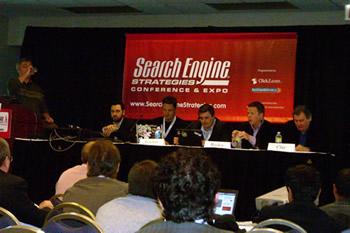
This show had a new format but all the major search engines were still in attendance. There was an amazing presentation from Google's Manager of Universal Search. The next generation of search is comming. See my show blog here: SES Chicago 2007
Hmmm, seems like the latest changes to the algorithms have had some negative effects on a few websites. Some of the top ranking sites I usually follow have lost a bit of page ranking. Seems to be a devaluation for 'paid links' (which was always a bad idea). Apparently, sites with appropriate contextual inbound links were not affected. I'll keep following this and continue to fine tune our processes to maximize results.
It seems that I have a much easier time optimizing a site for local search. It's been 60 days since the latest optimization to www.napplandscape.com in Longmont and its coming up #1 and #2 in both Yahoo and Google for a couple of the major keyword categories I focused on. They are getting more phone calls and e-mail requests then ever before. A very happy customer. (This was a typical project where I provided all the research data to their webmaster and he integrated everything, mostly following my recommendations)
The major search engines all agree on most of the 'best-practices' for search engine ranking optimization.
Content is king! Authority sites rule! Links create authority! Don't keyword spam! Properly utilize attribute and title tags! Include proper sitemaps! Avoid link farms! Don't use any 'black hat' tricks! In other words, all those highly promoted 'get rankings quick' promotions are just the equivalent of web spam to a search engine.
What Google and Yahoo always say when they are asked publicly is 'Create a great, user friendly, website with relevant, useful content, and we will rank it for the appropriate keywords. We want to serve up quality, relevant URL's, not spam, when someone is doing a search.'
So the steps to a strong website marketing strategy start with good keyword research. The site needs to have proper attribute tags, relevant HTML title tags, and good contextual use of the highest searched keywords. Once all that's done it's time for a new xml-site map and a formal submission to the major engines. Then, it's time to start building those inbound links.
You can usually improve a site's ranking relative to it's competitors by studying what they are doing and improving upon their efforts. Once your rankings start to climb then you should do a monthly update to your site to keep it 'fresh' for the next crawl by the search engines.
We are experts in this area. Our main customers are webmasters who turn to us for technical assistance with their optimization projects. We can also work work directly on and improving your existing site.
Here's some great free SEO advice:
These are the basics that all the professionals agree on:
Identify your target market through 'technical' keyword analysis
Optimize all title tags and attributes with search engine friendly tactics
Write good content that emphasizes your relevant keywords
Design the site to be user friendly - test it with Google webmaster tools
Create a solid site map with no broken links and submit it to the majors
Start developing good 'contextual' inbound links to your site - no link farms
Post in relevant forums, submit to relevant directories- become an 'authority' site
Review your online competition and update your site content monthly
Consider highly targeted paid ad campaigns
Keep up to date on your competitors activities - they could be stealing your traffic
Have the SEOwhiz put his experience to work on professionally optimizing your site.
December, 2006: Search Engine Strategies Conference, Chicago (the BIG event)

Many SEO companies and SEO experts were in attendance and eager to learn about the newest strategies that the experts were utilizing. The latest theories in the ever changing art of website optimization were discussed at length.
Great presentations were made by some of the major SEO firms from around the country. They included Current Wisdom, Razorfish, SEMPO, NewGate, Key Relevance, WebMama, RedBricks, The Well, Smart Search, and the incredible firm; BizResearch.
What is the secret to all those search engine algorithms ? Well, it turns out to be quite simple. Adam Lasnik from Google described it best. They want to serve up great search results. When someone is searching for particular keywords they want to deliver relevant sites. They want to be the best search engine for people to use.
Keyword Research....that was repeated over and over again. It was very interesting to hear very similar responses from Google, Yahoo, Ask, and Windows Live. Specific tools were recommended over and over. "Use what the professionals use."
Check out my Secret Page here: Google Secrets
I change this out occasionally when there are some more interesting SEO insights. However, I'll leave this one up as long as Google continues to give access.
Local search can be a completely different animal. There are actually great tools to focus a website on a local geographic marketing area. To optimize a site for local marketing areas the best recommendations were to update your free listing in Yahoo local, Google Maps, and Windows Live Local. And, of course, don't forget to have your address and zip code all over your site !
I also learned a few 'secret' interesting and very effective tactics to improve your local search rankings.
After that conference I figured out that there is a big hole in the Denver online market. Many, many searches for new car info in Denver and actually not so many websites offering relevant content. (defiantly a business opportunity for someone wanting to chase the appropriate keywords)
While not specifically a site optimization event, it was interesting to se how many 'automated tools' are being promoted for hosting companies (and others) to sell online. My opinion is that NONE of these automated tools do anything other than return some 'facts and figures' about a particular website. One of the biggest features being promoted (again) is the automatic submission to 'thousands' of search engines. First off, there are only 4 - 5 search engines that make up 95% of all online searches. Secondly, the major search engines will crawl every site automatically every 30 - 90 days. If you want them to crawl it faster you just have to make a request through their website. (do the paperwork)
ModernBill is a billing software used by hosting companies and webmasters with high volume websites. What was interesting at this conference was the after-hours discussions (and beer drinking) with many successful website owners. Most all of them told me that they totally outsource their optimization projects to the major SEO agencies. and spend thousands a month on a never ending campaign to improve their search rankings) For them it's a game of defense - always attacking their competitors rankings.
These conferences and conventions never end. This one focuses on Internet Service Providers and the related support companies surrounding them. The newest push is to offer automated SEO services. Regardless of the industry or competitive landscape, they offer a one size fits all solution.
Well, this is a great conference because it attracts all the big shots from Silicon Valley. It's really more of a hardware conference, but lots of companies were offering seminars on their latest software and solutions for the service providers.
This is the first HostingCON conference ever. It seemed to be a smash hit. Completely packed with a ton of vendors exhibiting their latest tools. The happy hours and after parties were great. This will probably the major annual event and showcase for the hosting industry.
These local webmasters are geniuses. They can create art from code. But I've come to realize that there are 2 types of web developers. Those that claim that they can do everything, from coding, to design, to marketing - and those that know better. We reviewed some sites and looked over their search rankings. Often, a webmaster would claim to have achieved a #1 ranking on Yahoo or Google. But they were ranking for keywords that nobody was searching for. The result: an under performing website. I discussed the importance of keyword research and targeting highly searched keywords. Within a month two of these webmasters hired me to help them on some customer websites. I've now started to enjoy search engine optimization more that developing websites. I've become a search engine optimization expert.
|